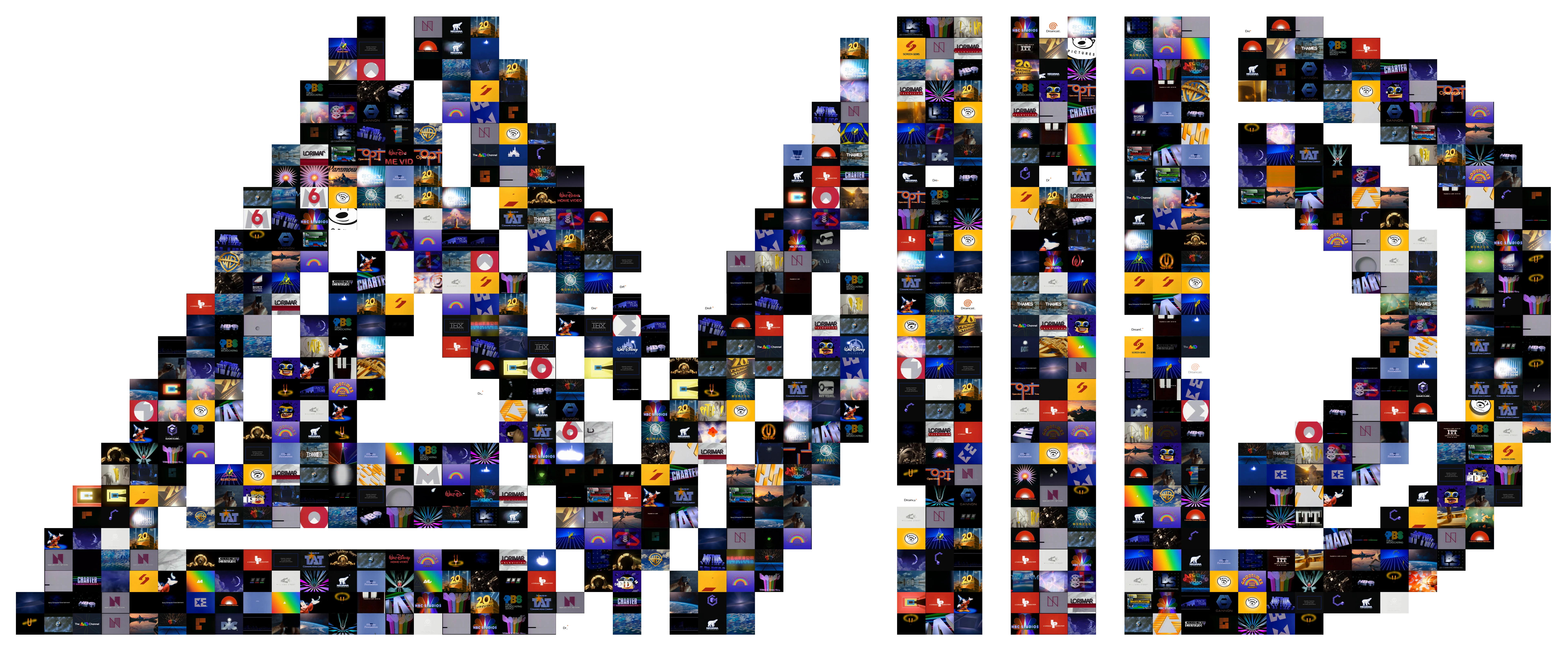
AVID logo
Yup. It's here. The stuff Astralite and I did is just the first 8 seconds of the thing, the rest of it is… things I personally want to get good at lmao. Think I should get the trivia stuff out of the way first:
-
The whole thing was done in Blender, using two different versions: 2.79 for the actual animation, 4.4 for the final composite with the rays and stuff.
The entire thing could have been done in one version or the other, but I used 2.79 because I thought Astra would want to do something with it, whereas 4.4 is really to make compositing go faster because it's a version where the compositor uses my GPU.
-
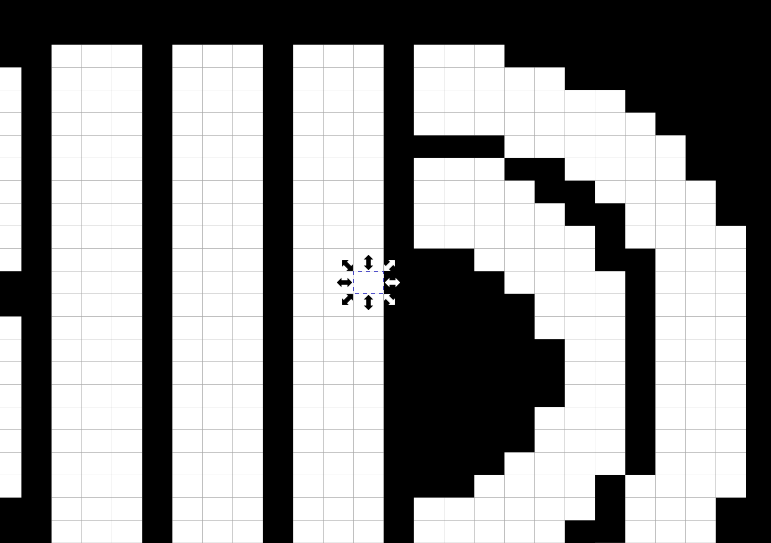
The video wall map was made by Astralite. It was originally a full-size SVG. He also made the concept… and the music to go with it, which is NOT the one shown in the video. Hoping it will be heard in future videos though.
-
The animation was generated using a Python script. It's worth noting that the actual script is maybe about 10% of the file—that being the configuration section at the top, and the thing-doer at the bottom—the middle majority is just the PNG parser library pasted in for convenience.
This is probably the first time I had actually used Blender's Python capability for anything "hands-on". Previously I had tried to make a few extensions with it.
The script originally used the Pillow library, which in regular Python is one of the major libraries used to manipulate pictures. I knew of this sick trick used to install libraries using Blender Python, and it actually worked on my end. But it's a bit too impractical to expect people to install things using unconventional methods. And besides, the WHOLE kitchen sink isn't needed—just the one that does the job, in this case parsing a PNG image. Specifically, Astra's video wall map squished down to a 54×29 pixel art image consisting of only black and white (where the individual videos will be placed).
-
64 videos were used in the 927 screens. You may have noticed a LOT of duplicates—it's because the videos are assigned randomly, independent of each other. I could have figured out how to ensure the recurrent videos don't appear like literally right next to each other, but that would have taken a bunch more math and it doesn't really matter anyway.
Every one of those videos are 480×360 normalized to 60fps, because that's the frame rate the intro was originally rendered in.
-
Rendering the raw animation took two hours in total, and a lot of memory. Most of the time and memory spent on loading all the video files, I find. If a lot more videos were used I would have probably run out of them, and this is in a 16 GB machine. Didn't even enable swap.
Next up, the process…
Astralite approached me for a collab on a project at the end of February 2025, for a new AVID visual.
We exchanged a couple of concepts to get an idea of what exactly we'll be making.
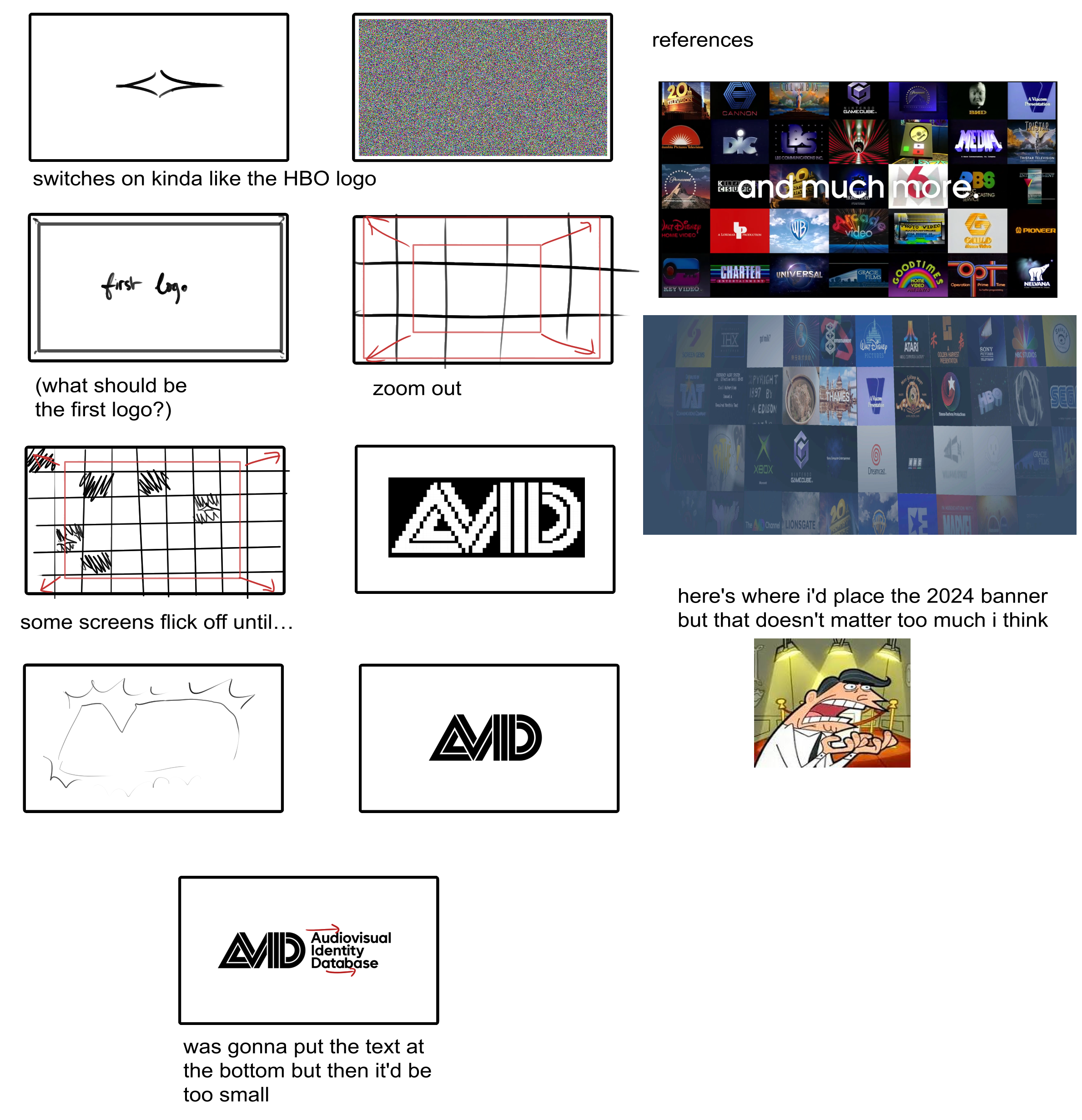
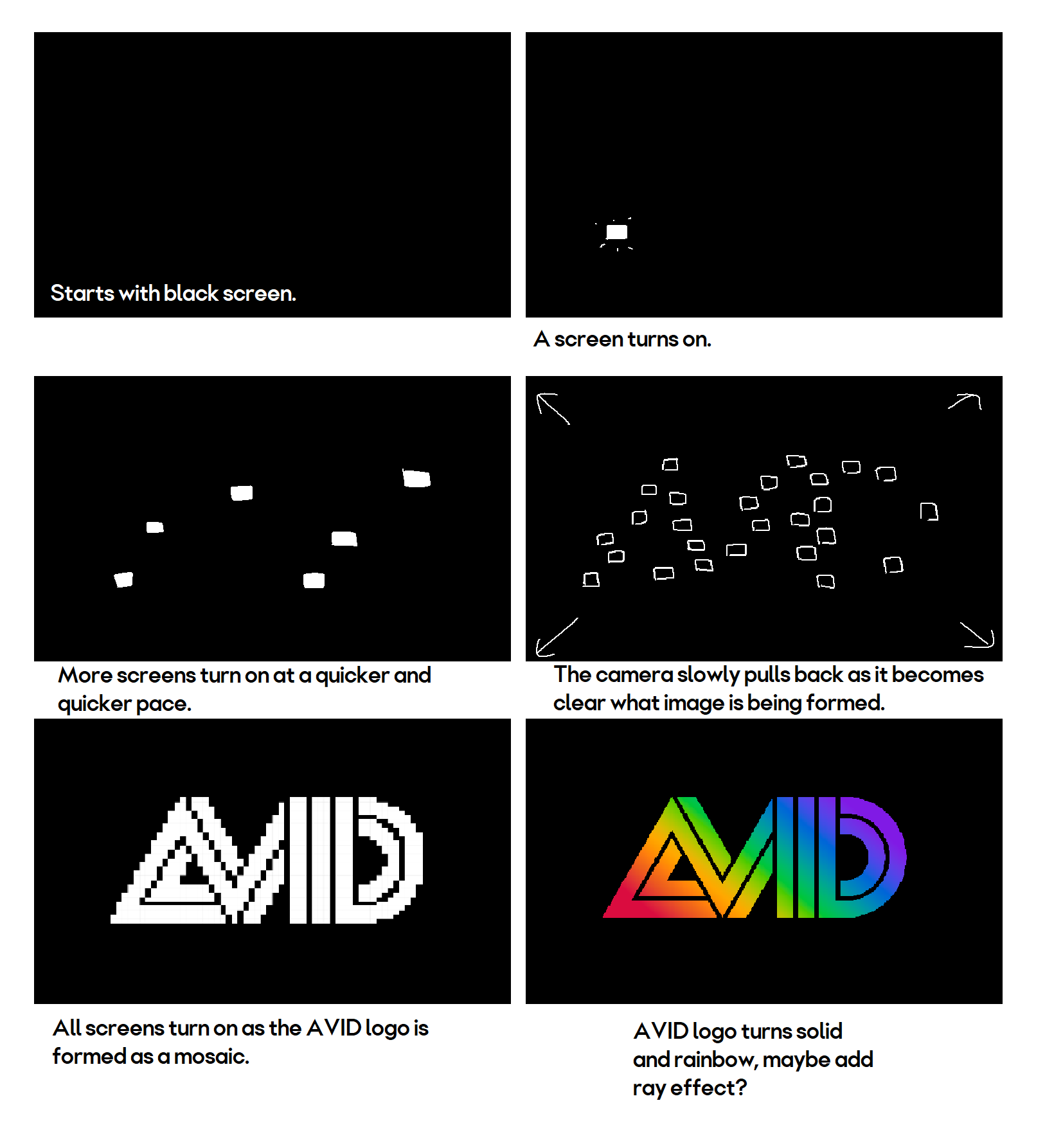
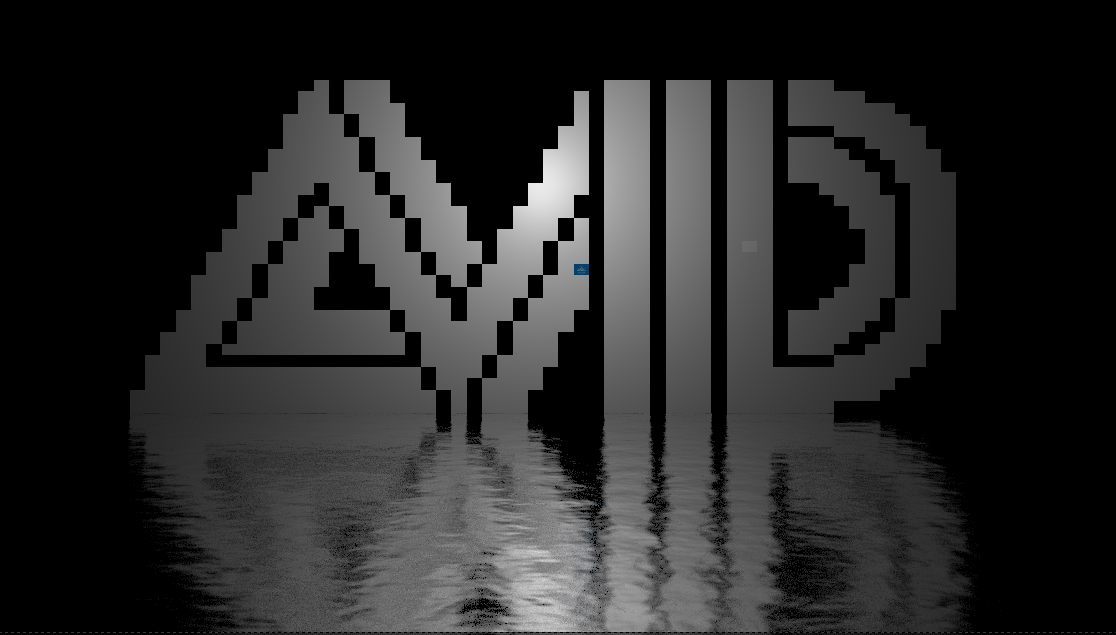
This was one of the first mockups, the SVG just imported into Blender.
The Build modifier would work here, but then the images would presumably still need to be assigned manually—a Sisyphean task if there was one, considering we'd need to do it for 900+ of these things.
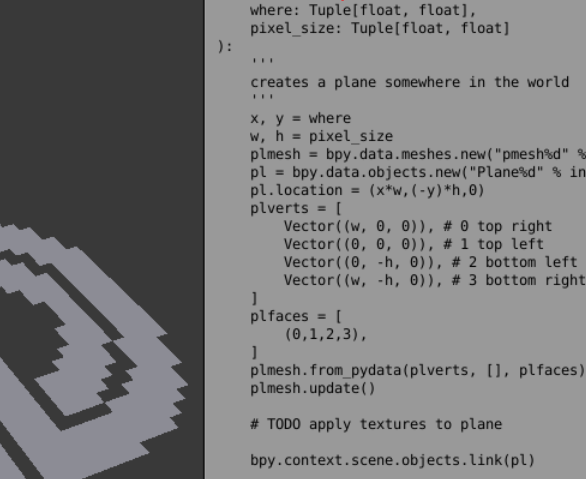
But I had other plans. This sounds like something that could be automated. Now having played with geonodes for a bit I doubt it can be used. So I turned to what would work for sure—especially for the version Astra was using—Python scripting.
A short while later I managed to instantiate the AVID logo from the map downscaled to pixel art.
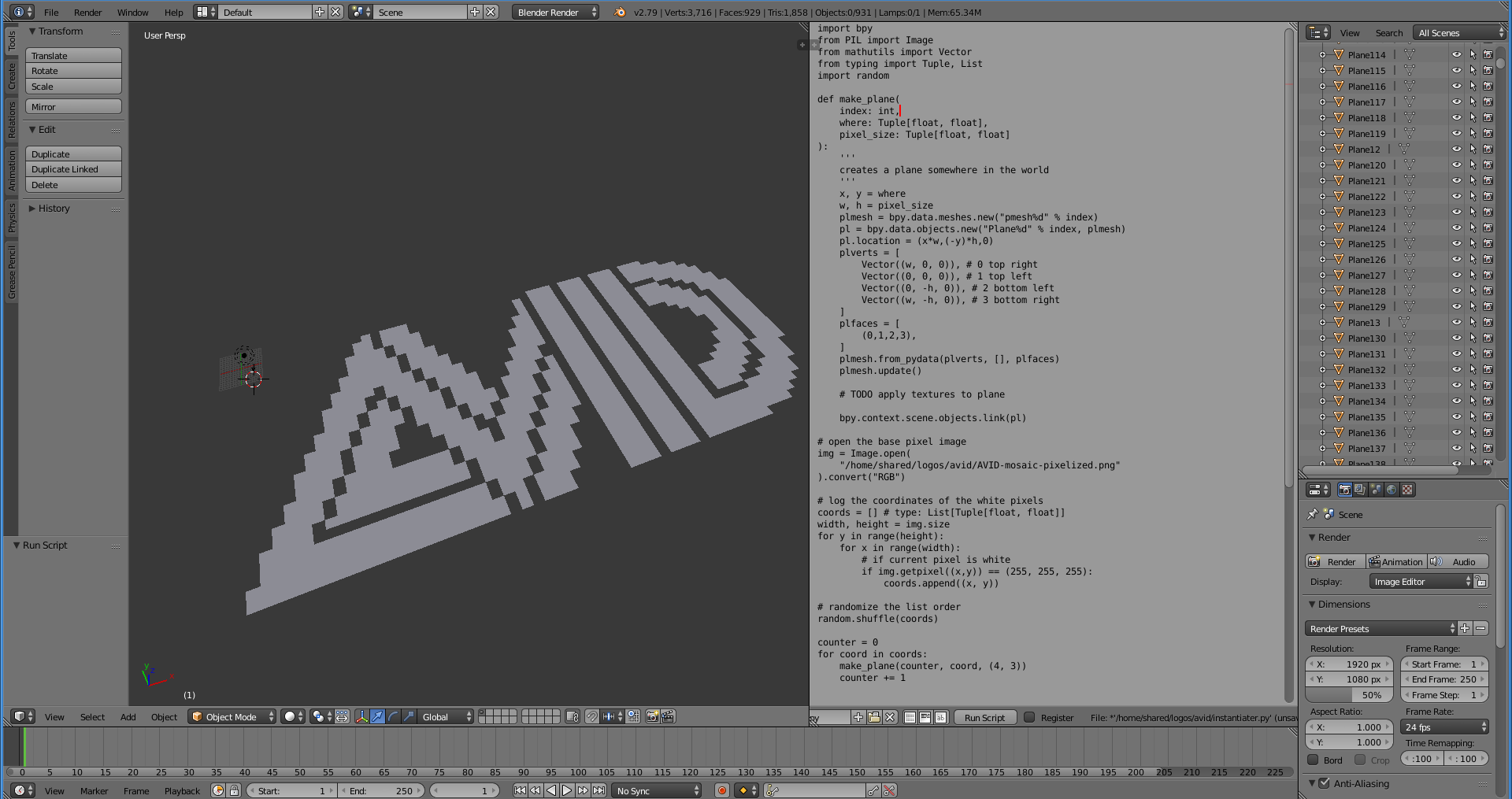
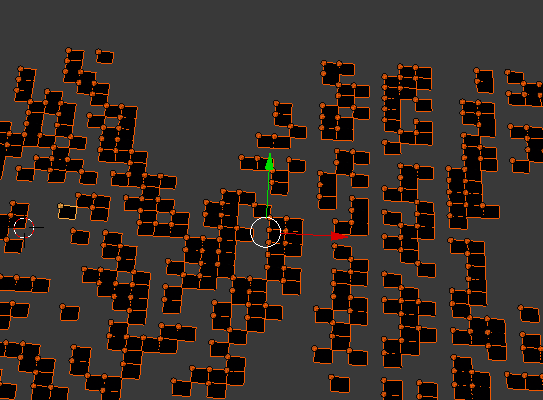
The next part was making the parts of the AVID logo map appear one-by-one, with a video for each. A unique texture was generated for each video and then assigned randomly.
The problem was… it ate all my RAM, probably because the test videos I used were all in HD. Had to kill Blender a couple of times to prevent my computer from freezing.

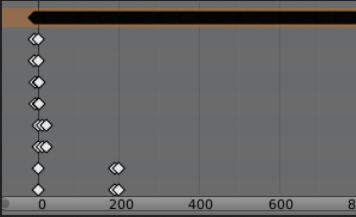
Then it was time to time the things, which of course needs math. I had a target time (5 seconds or so at this point), so I fiddled around in Desmos to get the right curve to place keyframes on. Also provisioned for the "switch on" animation, which is a separate video file also made with Blender.
Later on I tried to control which videos show up first by prioritizing the center coordinate, then the pixels surrounding it, and then the rest of the coordinates.
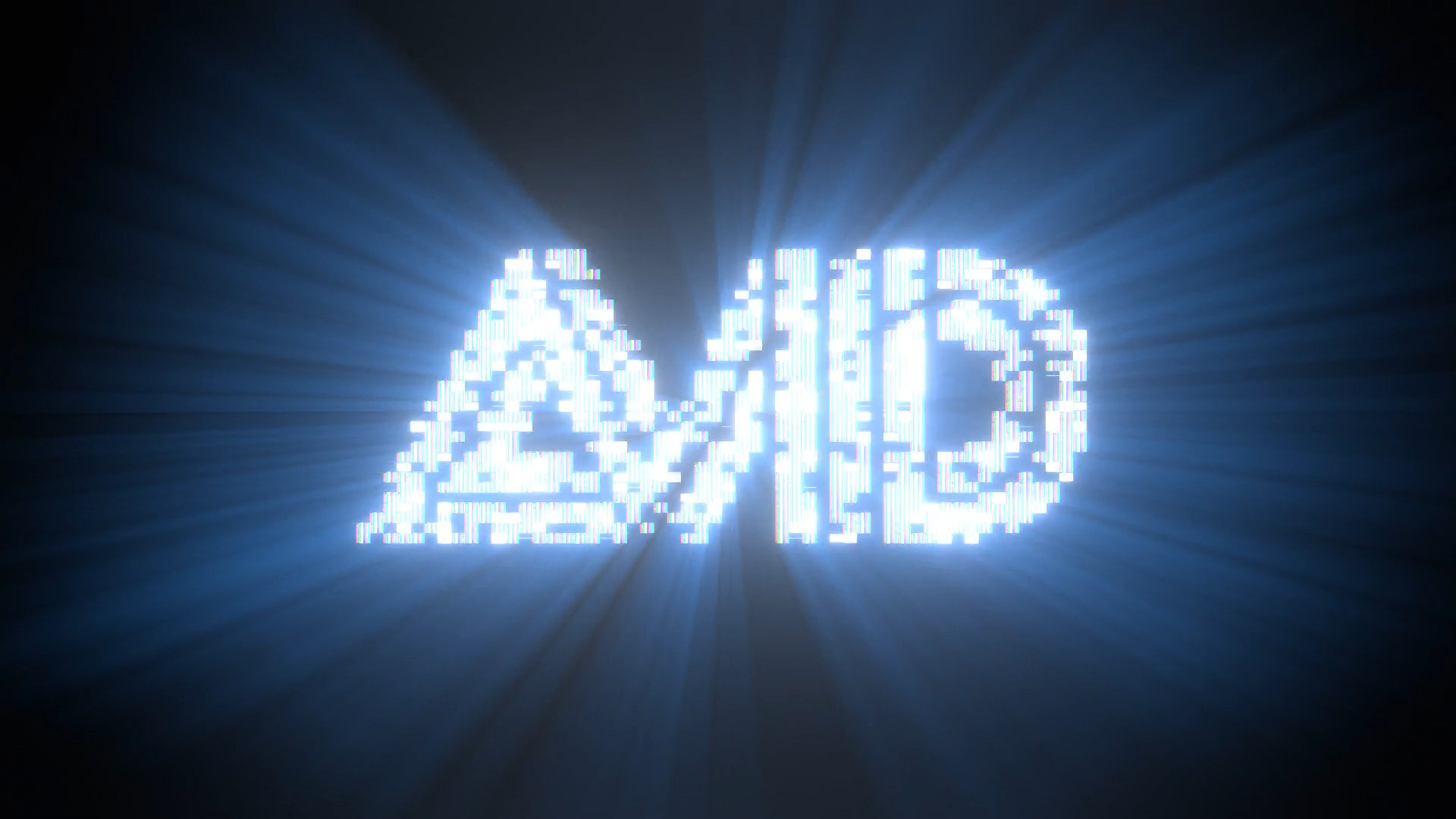
Once the basic animation was up and running, it was time to prepare how I might composite the thing for the final video. When all that's done, it was all just a matter of refinement.
Astralite did send me a couple of logos, but I found a lot of them too. For the ones I wanted to include, I referenced the AVID wiki header image, as well as the significant findings like TAT Communications Company, Nebraska ETV Network, and ITT Corporation.
The finishing touches were done at the end of March (there probably shouldn't be a reason for me to be taking that long). Two master versions are made, one for just "AVID" (the one that would eventually be used) and the other for "The AVID Channel". Not only are they silent, but they also end early—it's just to save a bit of file size since the logo is just a still frame and a fade out at the end. I also made sure they fit within a 4:3 safe area as well, in case it would be cropped as what I had to do with The AVID Channel ident that shows up at the very beginning.